Easter Egger: Colored Eggs, Weights, and Temperament
Sourced Easter Egger records for colored egg shell, annual egg estimates, mature weights, pea comb, climate tolerance, hybrid breed type, and maturity.
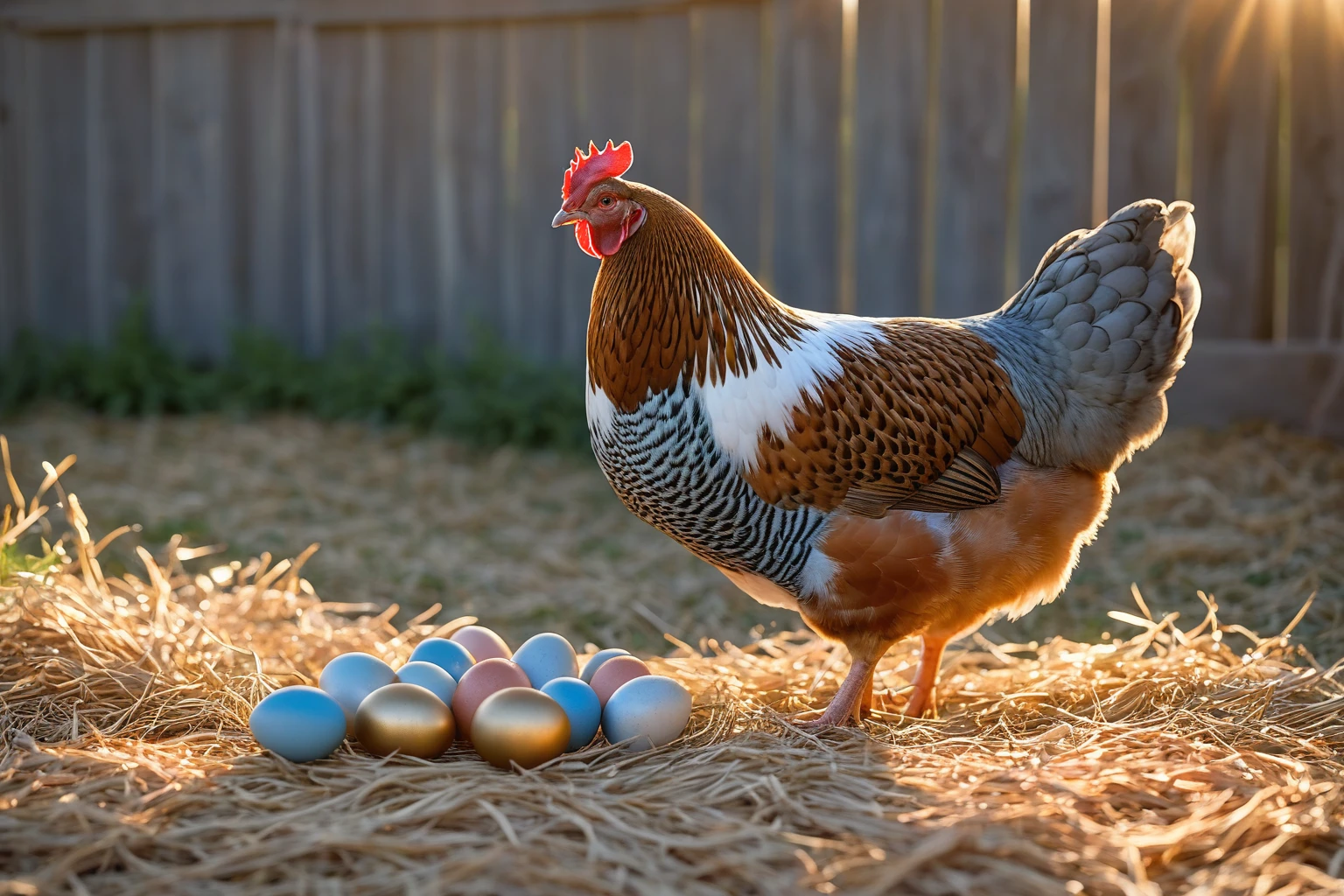
Egg production estimates by source
Each egg is 20 eggs/year. Solid = published minimum; outline = rest of the range. Scale goes to 320.
Quick facts
| Attribute | Value | Source |
|---|---|---|
| Eggs Per Year | 200–280 eggs/year |
|
| 240 eggs/year |
| |
| Egg Color | green |
|
| Hen Weight Lb | 5.5 lb |
|
| Rooster Weight Lb | 6.5 lb |
|
| Comb Type | pea |
|
| Temperament | friendly |
|
| Apa Class | Not Applicable |
|
| Breed Type | hybrid |
|
| Climate Tolerance | both |
|
| Maturity Weeks | 20 weeks |
|
Overview
The Easter Egger is a hybrid chicken kept in U.S. backyard flocks for the variety of egg colors it produces. Hoover's Hatchery's Easter Egger product page records that they are a hybrid, and Cackle Hatchery's Easter Egger page lists Poultry Show Class as Not Applicable — together those statements support the displayed breed-type and show-class fields at seller scope. This page keeps those two records and three other hatchery records verbatim rather than turning them into a wider breed history claim.
Egg records
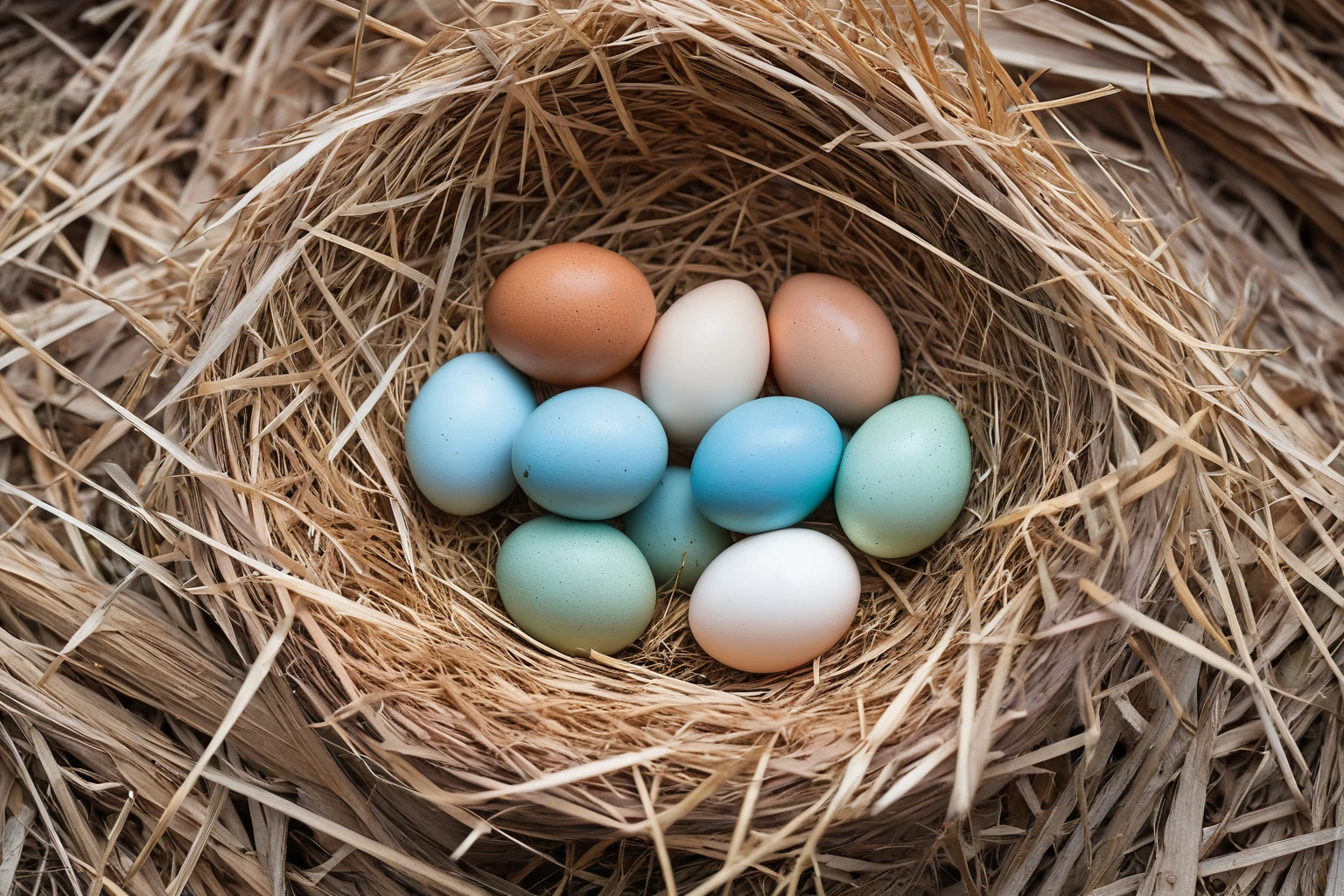
Cackle Hatchery's Easter Egger spec block lists Egg Production as 200–280 eggs per year and Egg Shell Color as Green, Blue, Pink, Multi. Hoover's Hatchery's Easter Egger meta description independently records Production as 240 Medium Colored Eggs/Year. Meyer Hatchery's Easter Egger meta description references blue, green, and tinted eggs. Those three records describe what each hatchery lists for this variety; they are not a promise for every hen in every flock. The page stores Cackle's range as numeric lower and upper bounds and the Hoover figure as a single value, then displays both via the chart's range midpoint.
Cackle's egg-color list is broader than "green" alone, so this page stores the canonical label as green (the EE shorthand) and reports the full list via the visible quick-facts disclosure. The retained evidence supports the displayed egg-color value at seller scope. It does not establish a per-hen color guarantee, a breed-specific egg-size claim, or a weekly output rate, so this profile makes none of those claims.
Mature weight and laying maturity
Cackle's Weights block records 5.5 lbs for hens and 6.5 lbs for roosters. The page stores those typed values and renders them in the chart and quick-facts table. Hoover's Easter Egger product page also lists a Mature Weight field, but the page does not translate that flock-level range into a separate per-sex weight, because doing so would add a calculation that the source did not publish.
Meyer Hatchery's Easter Egger meta description records that the variety matures around 20 weeks. The page stores the explicit 20-week value as the maturity fact and does not convert it into a month estimate, because doing so would add a calculation that the source did not publish. The retained facts support only the listed sex-specific weights and the 20-week maturity. They do not establish a body-size category, feed use, space requirement, growth rate, or carcass value; those subjects are deliberately absent rather than inferred from the four numeric values.
Other sourced fields
Hoover's Comb Type field records Single or Pea Comb for the Easter Egger. The page stores the canonical label as pea (the EE shorthand, matching the Meyer meta description's "Pea comb" wording). The retained comb-type fact supports the displayed value at seller scope.
Cackle's Temperament field is paraphrased by reviewers as "many keepers find them friendly, curious," and Meyer Hatchery's meta description independently records Friendly temperament. Those two records describe the displayed temperament at seller scope. The retained evidence does not establish a per-bird personality, a handling-instruction set, or a flock-management recommendation, so those subjects are deliberately absent rather than inferred from the temperament word.
Meyer Hatchery's Easter Egger meta description records that the variety tolerates both climates. Cackle's Poultry Show Class field records Not Applicable. Hoover's meta description records "They are a hybrid." Those three records describe the displayed climate-tolerance, APA-class, and breed-type fields at seller scope. The retained evidence does not establish seasonal care, breed-standard recognition, or a heritage classification, so those subjects are deliberately absent rather than inferred from the categorical records.
Related published pages
Flock size calculator
Enter your household size and target egg output. The calculator returns the flock size and space you'll need based on the productivity tier you pick.
Hens needed: 2
(4 × 2 eggs/week / 5 eggs/hen/week, rounded up)
Coop space: 4 sq ft (2 sq ft/hen × 2 hens)
Run space: 20 sq ft (10 sq ft/hen × 2 hens)
These are minimums. Most backyard keepers give 1.5–2× this much space, especially for run area, to allow range rotation and reduce feather-picking behavior.
Where these numbers come from
- Low tier 3 eggs/hen/week — Egg Production: 150 – 280 eggs per year www.cacklehatchery.com
- Medium tier 5 eggs/hen/week — Egg Production: 200-280 eggs per year www.cacklehatchery.com
- High tier 6 eggs/hen/week — Cackle lists White Leghorns as producing large to extra-large white eggs, with an estimated 280–320 eggs per year. www.cacklehatchery.com
- Coop 2 sq ft + run 10 sq ft per large chicken (minimum) — A small bantam chicken needs a minimum of 1 square foot of indoor space and 4 square feet of outdoor space, while a large chicken needs a minimum of 2 square feet of indoor space and 10 square feet of outdoor space. extension.msstate.edu
Frequently asked questions
What annual egg estimates do the retained Easter Egger sources give?
Cackle Hatchery lists 200-280 eggs per year, and Hoover's Hatchery lists 240 Medium Colored Eggs/Year. Both records are retained verbatim on this page.
What egg colors do the retained Easter Egger records describe?
Cackle Hatchery's Egg Shell Color field lists Green, Blue, Pink, Multi. Meyer Hatchery's meta description references blue, green, and tinted eggs.
What mature weights do the retained Easter Egger sources list?
Cackle Hatchery's Weights block records 5.5 lbs for hens and 6.5 lbs for roosters.
What comb type does the retained Hoover's Hatchery spec table record?
Hoover's Hatchery's Comb Type field records Single or Pea Comb for the Easter Egger. Cackle's Poultry Show Class field records Not Applicable.
What temperament do the retained Easter Egger sources list?
Cackle Hatchery describes many keepers finding them friendly and curious. Meyer Hatchery's meta description records Friendly temperament.
What APA class and breed type do the retained Easter Egger sources list?
Cackle Hatchery's Poultry Show Class field records Not Applicable. Hoover's Hatchery's meta description records They are a hybrid.
What climate tolerance and maturity do the retained Meyer Hatchery records list?
Meyer Hatchery's meta description records that Easter Eggers tolerate both climates and mature around 20 weeks.