Speckled Sussex: Sourced Egg and Weight Facts
Compare sourced Speckled Sussex records for 200–240 and 240 eggs per year, cream shells, mature weights, maturity, comb, temperament, and class.
Egg production estimates by source
Each egg is 20 eggs/year. Solid = published minimum; outline = rest of the range. Scale goes to 320.
Mature weights by source
Quick facts
| Attribute | Value | Source |
|---|---|---|
| Eggs Per Year | 200–240 eggs/year |
|
| 240 eggs/year |
| |
| Egg Color | cream |
|
| Hen Weight Lb | 7 lb |
|
| Rooster Weight Lb | 9 lb |
|
| Maturity Weeks | 20 weeks |
|
| Comb Type | single |
|
| Temperament | docile, friendly, gentle |
|
| Climate Tolerance | cold and heat hardy |
|
| Apa Class | English |
|
| Breed Type | heritage |
|
Overview
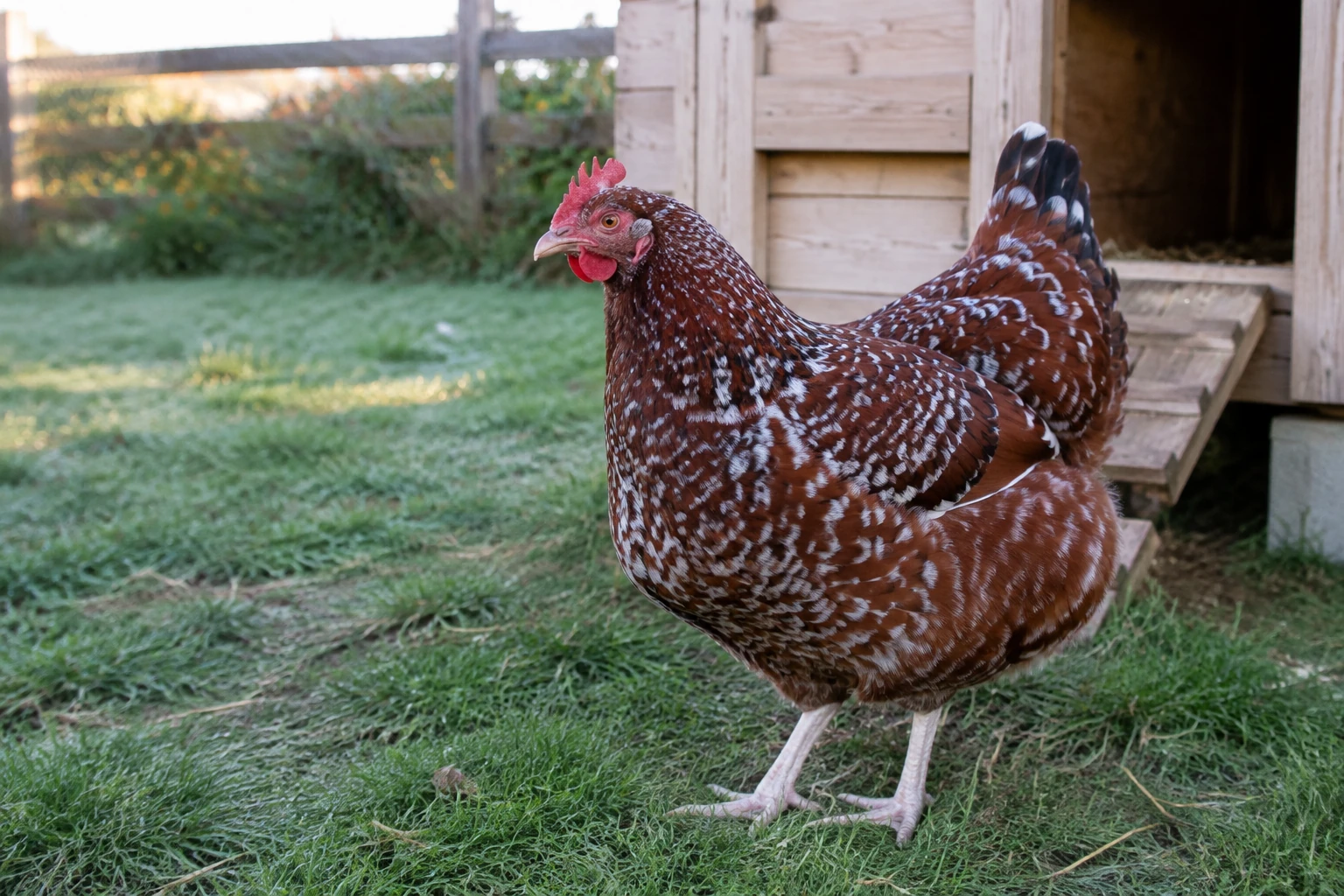
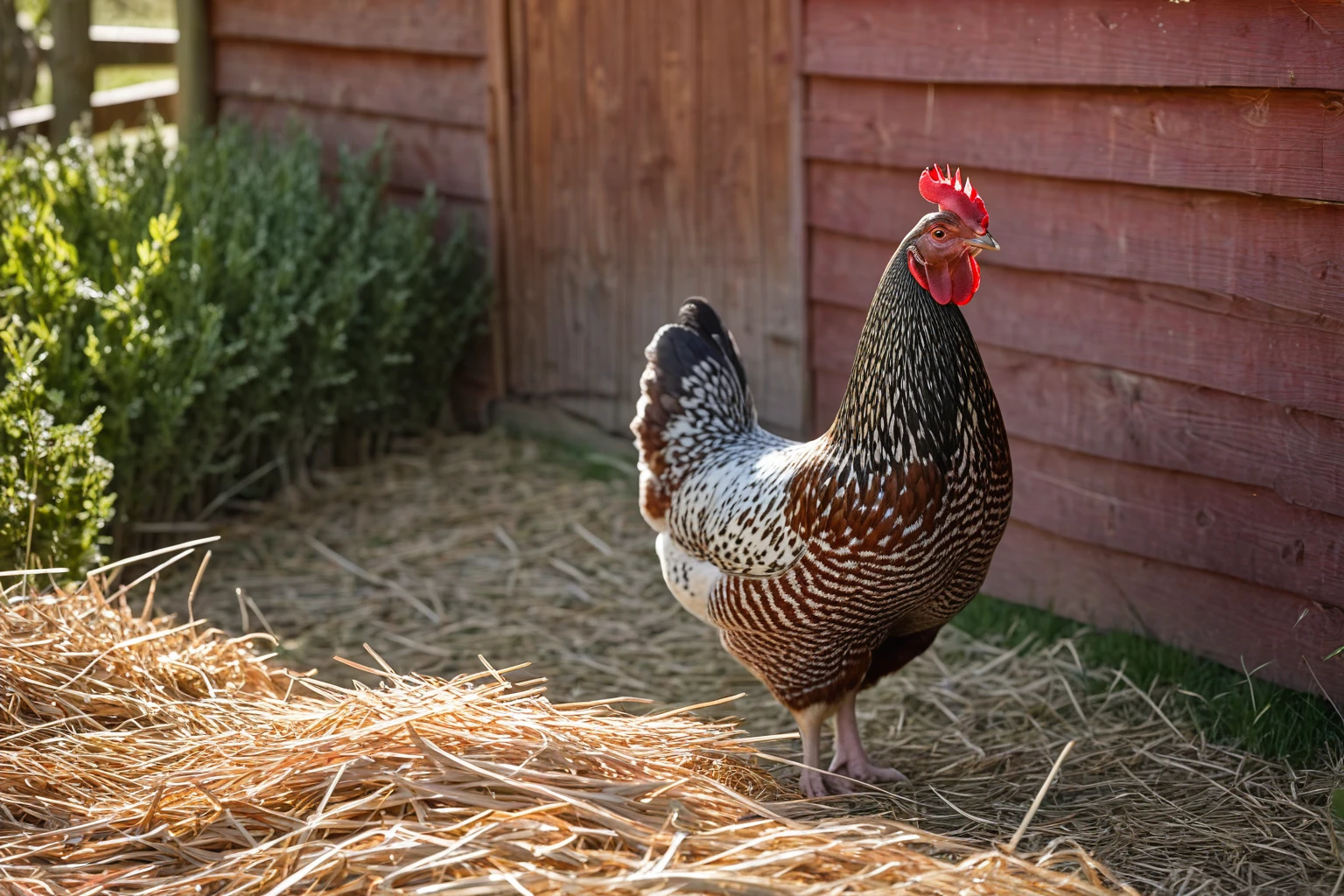
This Speckled Sussex profile is limited to retained records from Cackle Hatchery, McMurray Hatchery, and Hoover's Hatchery. The records cover annual egg estimates, shell color, mature weights, maturity, comb, class, heritage status, temperament, and hardiness. The generated editorial image is not evidence for any of those fields.
Egg records
Cackle lists an estimated range of 200–240 eggs per year. Hoover's lists 240 medium cream eggs per year. The single Hoover figure is the upper boundary of the wider Cackle range, so this page can show both records without manufacturing a blended estimate.
The publication uses Hoover's cream label for the egg-color field. That label and its annual figure come from the same catalog line, but they remain separate facts in the data: one is categorical shell color and the other is numeric annual production.
The Cackle range is stored as numeric lower and upper bounds with an eggs-per-year unit. The Hoover record is stored as a single numeric value with the same unit. The chart may use the range midpoint for bar length while displaying the source values as 200–240 and 240.
Neither source record is expanded into a weekly rate, a lifetime total, or a prediction for an individual bird. The page also avoids an unsupported comparison with another breed. These are seller-scoped catalog figures, preserved with their separate source links.
Weight and maturity records
Cackle lists a hen at 7 pounds and a rooster at 9 pounds. McMurray separately lists a female mature weight of 7 pounds and a male mature weight of 9 pounds. The terminology differs, but the two sources give the same sex-specific values.
McMurray's structured table lists 20 weeks to maturity. That explicit field is retained as a numeric value with a weeks unit. It is not converted into a laying-date promise, growth-rate claim, or comparison with a different breed.
The weight records stay separate from the maturity record. They do not support conclusions about feed, space, housing, carcass use, or expected performance, so this profile makes none of those claims.
Other sourced fields
McMurray's table labels the comb as single, the class as English, and Heritage Breed as yes. Hoover's catalog also labels the comb as single. The repeated comb value is kept with both source records rather than presented as a newly derived fact.
Hoover's temperament line reads docile, friendly, and gentle. Its hardiness line reads cold and heat hardy. This page preserves those phrases as catalog categories; it does not turn them into a guarantee about every bird or into climate-specific husbandry instructions.
Earlier material about origin dates, popularity, comparative performance, care routines, feed, space, medicine, and veterinary topics is not part of this publication. The available records do not support that breadth, so the profile stays focused on the fields readers can trace directly to the retained snapshots.
Related published pages
Flock size calculator
Enter your household size and target egg output. The calculator returns the flock size and space you'll need based on the productivity tier you pick.
Hens needed: 2
(4 × 2 eggs/week / 5 eggs/hen/week, rounded up)
Coop space: 4 sq ft (2 sq ft/hen × 2 hens)
Run space: 20 sq ft (10 sq ft/hen × 2 hens)
These are minimums. Most backyard keepers give 1.5–2× this much space, especially for run area, to allow range rotation and reduce feather-picking behavior.
Where these numbers come from
- Low tier 3 eggs/hen/week — Egg Production: 150 – 280 eggs per year www.cacklehatchery.com
- Medium tier 5 eggs/hen/week — Egg Production: 200-280 eggs per year www.cacklehatchery.com
- High tier 6 eggs/hen/week — Cackle lists White Leghorns as producing large to extra-large white eggs, with an estimated 280–320 eggs per year. www.cacklehatchery.com
- Coop 2 sq ft + run 10 sq ft per large chicken (minimum) — A small bantam chicken needs a minimum of 1 square foot of indoor space and 4 square feet of outdoor space, while a large chicken needs a minimum of 2 square feet of indoor space and 10 square feet of outdoor space. extension.msstate.edu
Frequently asked questions
What annual egg figures are retained?
Cackle Hatchery lists 200–240 eggs per year, while Hoover's Hatchery lists 240.
What weight and maturity values are retained?
Cackle and McMurray each list 7-pound hens and 9-pound males or roosters; McMurray lists 20 weeks to maturity.
Which categorical records come from Hoover's Hatchery?
Hoover's lists cream eggs, a single comb, a docile, friendly, gentle temperament, and cold and heat hardiness.