Barred Plymouth Rock: Sourced Egg and Weight Facts
Compare sourced Barred Plymouth Rock records for 200–220 eggs per year, brown shell color, mature weights, maturity, single comb, and catalog class.
Egg production estimates by source
Each egg is 20 eggs/year. Solid = published minimum; outline = rest of the range. Scale goes to 320.
Mature weights by source
Quick facts
| Attribute | Value | Source |
|---|---|---|
| Eggs Per Year | 200–220 eggs/year |
|
| Egg Color | brown |
|
| Hen Weight Lb | 7.5 lb |
|
| Rooster Weight Lb | 9.5 lb |
|
| Maturity Weeks | 20 weeks |
|
| Comb Type | single |
|
| Apa Class | American |
|
| Temperament | active |
|
| Breed Type | heritage |
|
| Climate Tolerance | cold weather |
|
Overview
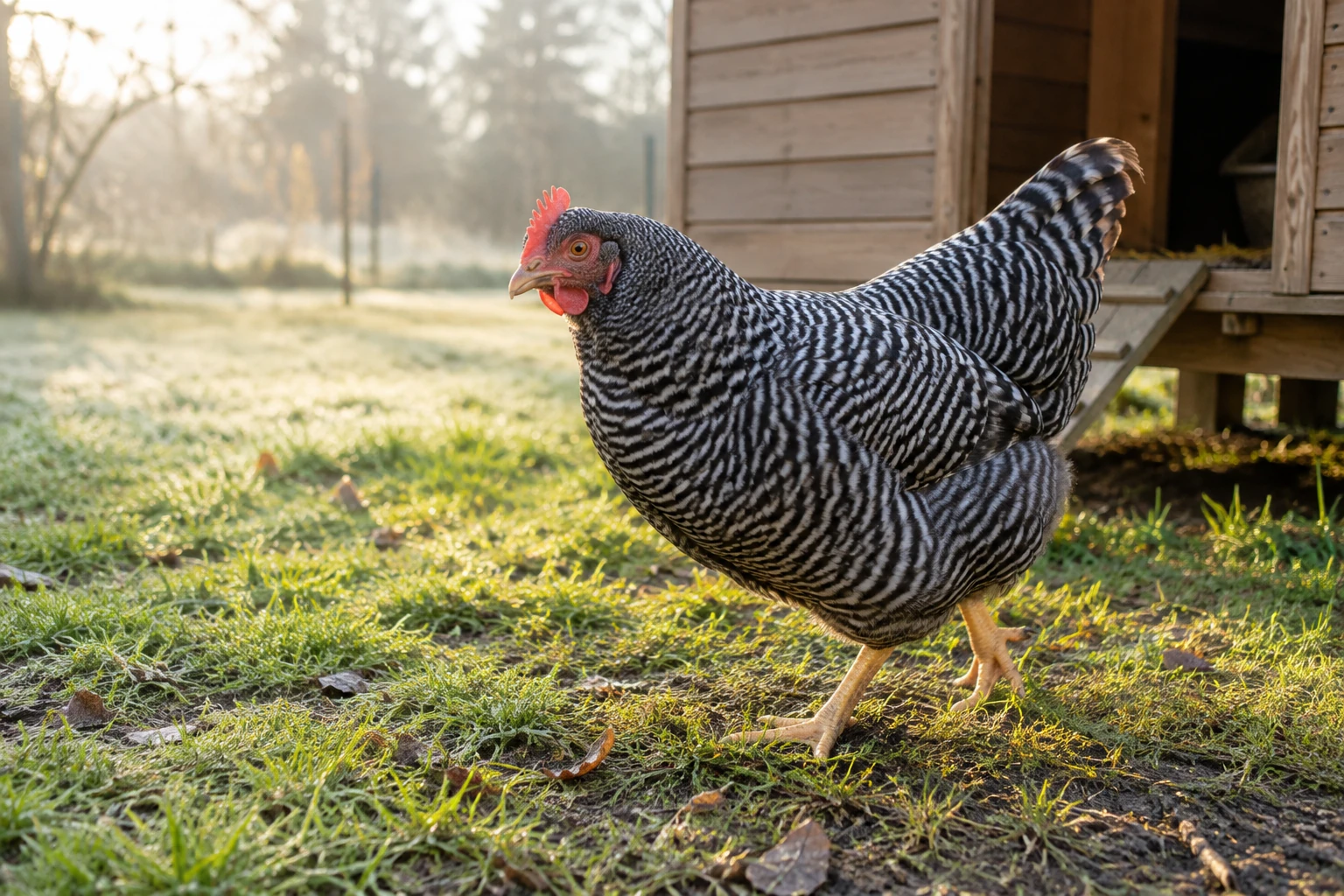
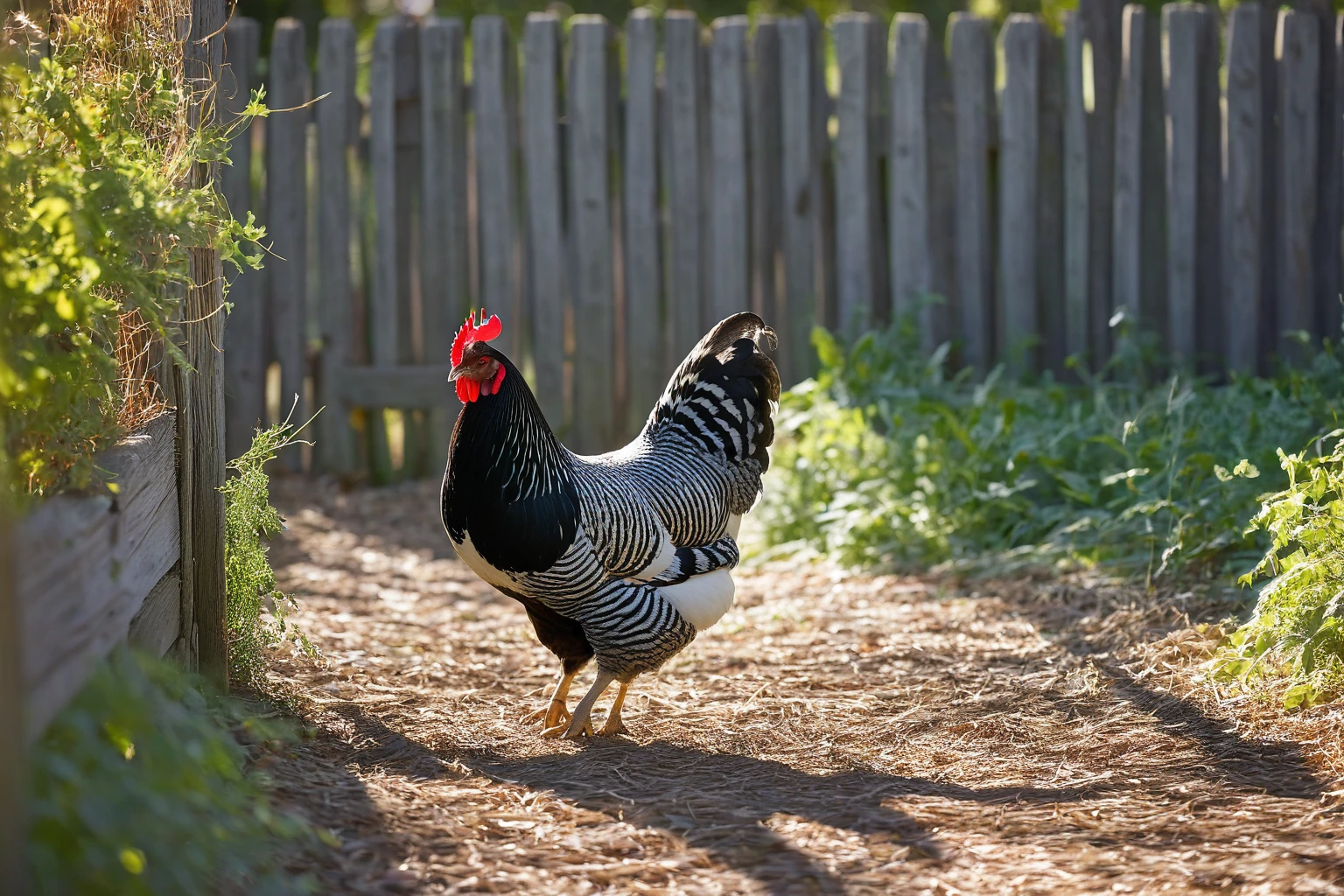
The published Barred Plymouth Rock record is deliberately limited to facts supported by the retained Cackle Hatchery and McMurray Hatchery snapshots. Cackle supplies the egg, weight, comb, class, and temperament fields for its Barred Rock listing. McMurray supplies the maturity, heritage, and cold-weather catalog records for its Barred Rock listing. The generated editorial image is not evidence for any of them.
Egg records
Cackle lists brown shell color and an estimated annual production range of 200–220 eggs. The publication keeps that exact range. It does not use the separate McMurray annual figure from the earlier draft, because the required output for this source set is the supported Cackle range rather than a blended or enlarged number.
The range is encoded with numeric lower and upper values plus an eggs-per-year unit. The bar chart uses its midpoint only to draw the range as one bar; the displayed label remains 200–220 eggs per year, and the midpoint is not presented as another hatchery estimate.
The source calls the annual figure an estimate. It does not guarantee that output for an individual bird, and it does not establish a per-week rate or lifetime total. This profile therefore reports the range at source scope without adding production comparisons or management assumptions.
Weight and maturity records
Cackle lists a hen at 7.5 pounds and a rooster at 9.5 pounds. Those are separate sex-specific mature-weight fields. They are not converted into a general size class and are not used here to infer space, feed, growth, or carcass characteristics.
McMurray's table pairs Weeks to Maturity with 20. The JSON stores 20 as a numeric value with a weeks unit. That table field is kept separate from the two Cackle weight fields, so readers can see which seller record supports each number.
The retained numerical evidence comes from two independent hatchery domains, but each field still represents a seller's catalog record. Agreement on a page-level source count does not make any one value universal. No unsupported age comparison or expected performance under particular conditions is added.
Other sourced fields
Cackle states that Barred Rocks have single upright combs. Its breed-facts block gives the poultry show class as American and the temperament field as active. These are categorical values; the profile does not turn them into scores, rankings, or predictions about every individual bird.
McMurray answers that Barred Rocks are a heritage breed and says the hens are not discouraged by cold weather. This page records those exact source-scoped labels. The cold-weather phrase is not extended into shelter, medical, or other husbandry instructions.
Earlier draft claims about origin dates, popularity, relative output, friendliness, dual-purpose use, care, feed, space, and veterinary topics are absent. The remaining page is shorter because the publication gate favors a traceable record over unsupported breadth. Every factual paragraph above points to the IDs shown beside the source links in Quick facts.
Related published pages
Flock size calculator
Enter your household size and target egg output. The calculator returns the flock size and space you'll need based on the productivity tier you pick.
Hens needed: 2
(4 × 2 eggs/week / 5 eggs/hen/week, rounded up)
Coop space: 4 sq ft (2 sq ft/hen × 2 hens)
Run space: 20 sq ft (10 sq ft/hen × 2 hens)
These are minimums. Most backyard keepers give 1.5–2× this much space, especially for run area, to allow range rotation and reduce feather-picking behavior.
Where these numbers come from
- Low tier 3 eggs/hen/week — Egg Production: 150 – 280 eggs per year www.cacklehatchery.com
- Medium tier 5 eggs/hen/week — Egg Production: 200-280 eggs per year www.cacklehatchery.com
- High tier 6 eggs/hen/week — Cackle lists White Leghorns as producing large to extra-large white eggs, with an estimated 280–320 eggs per year. www.cacklehatchery.com
- Coop 2 sq ft + run 10 sq ft per large chicken (minimum) — A small bantam chicken needs a minimum of 1 square foot of indoor space and 4 square feet of outdoor space, while a large chicken needs a minimum of 2 square feet of indoor space and 10 square feet of outdoor space. extension.msstate.edu
Frequently asked questions
What annual egg range is retained for Barred Plymouth Rock?
Cackle Hatchery lists an estimate of 200–220 eggs per year.
What mature weights are retained?
Cackle Hatchery lists hens at 7.5 pounds and roosters at 9.5 pounds.
What comb and maturity values are retained?
The retained records list a single comb and maturity at 20 weeks.